
Polished Concrete Floors
Professional Concrete Floor Grinding and Polishing
Polished concrete floors give you a durable, practical finish for homes and commercial properties. Rather than covering the floor with resin, epoxy or another coating, we refine the concrete you already have, using professional diamond abrasives to grind, hone and polish the slab.
As a result, the concrete itself becomes the finished floor, with no separate decorative layer sitting on top. Every slab is different, so the final look depends on its condition, composition and history. Aggregate exposure, natural variation and older marks may all stay visible in the finished surface, and that’s part of what makes each floor individual.
The Benefits of Polished Concrete Floors
A professionally polished concrete floor gives you a hard-wearing surface while keeping the natural character of the slab. Benefits include:
✔ A durable finish for busy residential and commercial spaces
✔ Straightforward day-to-day cleaning and maintenance
✔ No resin or epoxy layer that can peel or delaminate
✔ A choice of matte, satin and higher-sheen finishes
✔ Compatibility with many underfloor heating systems
The right result still depends on your existing concrete, so a site assessment lets us recommend the most suitable preparation, finish and level of protection. Book your consultation today.
Polished, Coated, or Overlay: Which Suits Your Concrete Floor?
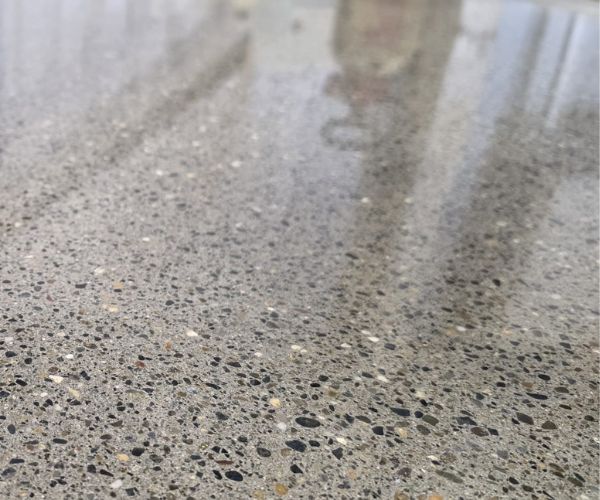
Polished concrete, coated floors and overlay systems can look similar at first glance, but they all work in different ways. Resin and epoxy products create a separate coating over the slab. Concrete polishing, on the other hand, mechanically refines the concrete itself, so the finished appearance comes from the slab rather than a coating placed over it. An overlay sits between the two: it’s a new cementitious surface bonded to the existing slab, then ground and polished the same way a direct polish would be, giving you a genuinely polished finish rather than a topical coating.
That doesn’t mean every polished floor, or every overlay, looks perfectly uniform. Natural colour variation, exposed aggregate and older markings often form part of the character of both.
Polished concrete tends to suit your project if you want the existing slab to become the finished floor, a natural and individual appearance, and no topical resin or epoxy layer. An overlay is worth considering if your existing slab isn’t a good candidate for direct polishing, since it gives you the same polished look with more control over colour and aggregate. A coating may suit you better where a highly uniform colour or a specialist performance system is required. We’ll give you honest advice based on your floor and how you’ll use the space.
Can Your Existing Concrete Floor Be Polished?
Many existing concrete floors can be ground and polished, though not every slab produces the same finish. Suitability depends on the age and strength of the concrete, how flat the slab is, any cracks or previous repairs, and whether it’s been painted, coated or covered with adhesive before.
An old coating doesn’t automatically rule out polishing, but it usually needs removing before we can properly assess what’s underneath. Cracks and repairs may still be visible afterwards too. That’s why every project starts with a proper assessment, rather than a promise based on photos or a phone call.
If your slab isn’t a good fit for direct polishing, our polished concrete overlay systems can often achieve the same look while giving you far more control over the finish. Not sure whether your slab is suitable? Tell us about your project and we’ll arrange an initial assessment.
Our Concrete Grinding, Honing and Polishing Process
Every floor needs a tailored approach, but most projects follow three main stages.
Assessment and Preparation
First, we inspect the existing concrete and discuss the finish you want to achieve. We check the floor for coatings, adhesives, cracks, repairs and uneven areas, and identify anything that needs removing before polishing can begin.
Where cracks or unevenness need proper attention first, that’s covered by our concrete floor levelling and repairs service.
Diamond Grinding and Aggregate Exposure
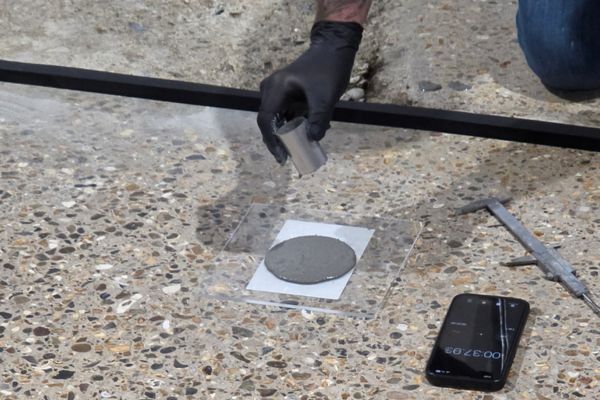
Next, we mechanically grind the concrete with professional diamond abrasives. A light grind retains more of the surface cream, while a deeper grind exposes more of the aggregate within the slab. The condition and flatness of your concrete will affect how consistent this looks across the floor.
Read more about our concrete grinding services, available on its own or as the first stage of this process.
Honing, Polishing and Protection
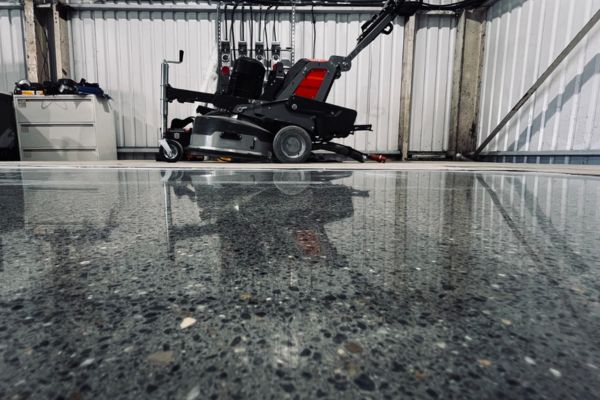
Finally, we work through progressive honing and polishing stages to reach your chosen sheen, from matte through to a more reflective finish. Where appropriate, we can also apply a compatible protective treatment to improve stain resistance, and we’ll talk you through the aftercare that suits your floor.
Polished Concrete Floor Finishes
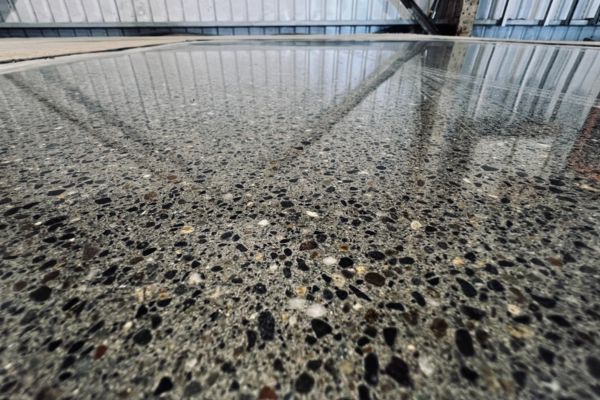
Polished concrete doesn’t have one fixed appearance. You can choose the level of aggregate exposure and sheen, depending on the condition of your slab.
A cream finish involves minimal surface removal, keeping more of the concrete’s upper layer with little exposed aggregate, for a softer, more uniform look. A salt and pepper finish uses a light grind to reveal smaller aggregate near the surface. It offers a balanced appearance for homes and commercial spaces. A deeper grind gives medium aggregate exposure, with more texture and character, while full aggregate exposure uses a heavier grind to reveal larger aggregate for a bolder, more decorative result. The final look still depends heavily on the original concrete mix and how the slab was laid.
Sheen works the same way. Matte or honed finishes are low-reflection and forgiving in busy areas, satin offers a subtle reflection that suits homes, offices and retail spaces, and a higher-sheen finish gives a more reflective look for showrooms and feature areas. The right choice depends on your lighting, footfall and how the room will be used.
Maintaining a Polished Concrete Floor
Polished concrete is straightforward to maintain once you know the basics. Sweep or vacuum regularly to remove grit, damp mop with a pH-neutral cleaner, and deal with spills promptly. Avoid acidic, bleach-based or highly alkaline products, since these can damage the surface or any protective treatment.
Maintenance needs vary with footfall and finish, and commercial floors may benefit from periodic professional attention to keep them looking their best. We’ll give you clear aftercare guidance and product recommendations once your project is complete.
Polished Concrete for Homes and Businesses
Residential and commercial floors face different demands, so the right preparation and finish will depend on how the space is used.
For example, a polished concrete kitchen floor must cope with oils, spills and food acids. A garage concrete floor may contain old paint, oil or previous coatings. Commercial floors may also need to withstand heavier footfall, equipment and tighter maintenance requirements.
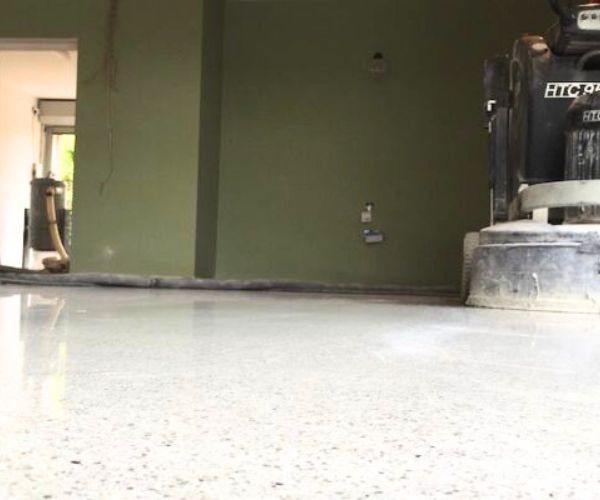
Residential polished concrete floors
Residential polished concrete floors suit kitchens, extensions, open-plan living spaces, basements, garages and home gyms, and work particularly well in modern interiors alongside suitable underfloor heating systems.
Explore Residential Polished Concrete Floors.
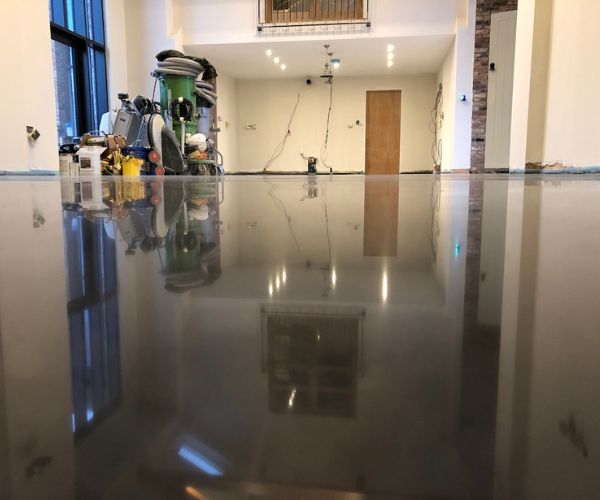
Commercial polished concrete floors
Commercial polished concrete floors create a durable, professional finish for shops, showrooms, offices, studios, hospitality spaces, workshops, warehouses and light industrial premises.
Explore Commercial Polished Concrete Floors.
Trusted by Homeowners and Commercial Clients
We work with homeowners, interior designers, property professionals and businesses who want a floor that performs as well as it looks. Before any work begins, we assess the concrete and explain what’s realistically achievable. We polish concrete floors across Buckinghamshire, Berkshire, Oxfordshire and London, including Beaconsfield, Marlow, Gerrards Cross, High Wycombe, Windsor, Sunningdale and Henley-on-Thames.
Why Choose StoneCura?
✔ A detailed assessment before any work begins
✔ Honest advice about the finish you can expect
✔ Professional diamond grinding, honing and polishing equipment
✔ Finish options tailored to your floor and your space
✔ Residential and commercial project experience
✔ Clear maintenance and aftercare guidance
✔ Coverage across Buckinghamshire, Berkshire, Oxfordshire and London – Areas We Cover

Competitive pricing . Efficient service . Excellent result . I cannot recommend StoneCura highly enough